Ads

Showing posts with label Jordan Garner. Show all posts

Monday, June 16, 2014

What should be in my site's Privacy Policy?

A client recently contacted me in a panic. They had seen the recent FTC settlement (see here) with Snapchat and were concerned about their own App's privacy policy. We talked through their concerns and determined that their privacy policy was sufficient to cover current usage of their App.

It is important for a Start-up developer to know the purpose of a "Privacy Policy" and its cousin "The Terms of Use."  They are not simply "make work" hassles for lawyers, or something to be copied blindly off of a Git repository. {Ed. Except if it is a Privacy Policy template from www.Baselex.com}.

The purpose of both can be summarized as the contractual obligations of each side, the user and the App provider, that exists when the App is used. {Ed. For our purposes, App covers any minimally interactive website.}

Terms of Use
The Terms of Use are fairly straight forward and mostly deal with the User obligations. In an effective ToU, the App Provider lays out some explanation of the functionality that will be encountered in using the App (such as forums or comments) and a code of conduct that the users agree to be held to when using the App. For example, many apps have a "non-harassment" component to their Terms of Use. Users that violate this, generally find themselves on the wrong side of the "Ban Hammer".  The Terms of Use are similar to an End-User License agreement, and tend to contain similar language. ToS, when effective, provide a User of an App with a clear list behaviors, rights, and obligations (such as honoring Intellectual property) that exist when they use the App.  

Privacy Policy
Privacy Policies differ in significant way from Terms of Use and generally lay out how the App Provider will use the data of the User. The goal of any effective Privacy Policy is to highlight the ways that a User's personal identification and data might  be used by the App Provider. Aggregated stats, geolocation, and preferences for Ad-Targeting are all pieces of data that an App Provider might collect about individual or collective users. There is no explicit rule in the U.S. that limits the data that an App provider can collect to specific categories. (with the exception of various HIPPA relevant issues which are beyond the scope of this brief post.)

What is required is that the App Provider lay what those pieces of information that are being collected. A well drafted Privacy Policy provides enough scope to the App Provider to modify their data collection practices based on market need, while not deceiving or misleading Users as to the scope and extent of the data collected.

Where SnapChat ran afoul of the FTC was in failing to abide by this primary role. The Snapchat Privacy Policy (according to the FTC) provided explicit statements on what data was and what was not collected through the use of the App. Specifically, Snapchat claimed that the communications sent to recipients was ephemeral to the recipient and not stored in any database or server.  Through a series of hacker data breeches, it became clear that not only was this not true (there were vast databases of Snaps retained by Snapchat) but the data was not ephemeral to the recipient. The recipient of a Snap could, through various technological methods, obtain a permanent copy of the snap.

 Furthermore,  the Snapchat privacy policy explicitly disclaimed the storing of geolocation data. Again, after a review of the data stored by Snapchat, it became clear that geolocation data was being stored for future use.

As a result of these revelations, it became clear that the Privacy Policy and Terms of Use for SnapChat's app was woefully deficient and confusing. The natural outcome when consumers feel deceived and confused about the true nature of a product is an investigation by the FTC.

Therefore the first thing to ask when crafting a privacy policy is what does your app or website seek to accomplish, and how does it use the user data in order to accomplish task?  There is no benefit in making a statement about specific functionality and features if these features are not present. Quite the contrary, there is a significant downside to telling App users one story about functionality, while the truth tells another. Likewise, if you need geolocation data, or contact lists, explicitly state that you need them and use them in your privacy policy. It is better to lose a few privacy adherents in the early use stage then have potentially millions of potential plaintiffs in a class action suit based on deception.

As final matter, Privacy Policies should not be drafted and locked in a drawer under the TOS/PP file folder in your server root.  Every iteration of the App, from customer feedback, to posts, to direct messaging might change what type of data you need to collect from your users. Similarly, if you are changing revenue models, you might need to update your privacy policy to indicate the structural change in how you are using the data (from purely analytic, to a data broker model). A quaterly review of both the ToS and PP are a good way to ensure that you are not providing inadvertently misleading information to your Users about the App and their privacy.

Jordan Garner

Monday, May 12, 2014

Start-UP Failure and IP

Quick post:

I have been filling my free reading time with stories about how different start-ups fail. My inquiry is not limited to "Tech" or "Software", but to restaurants, shipping companies, mines and other small and medium businesses that found themselves suddenly with more liability than assets.

Obviously, I am not a business manager, so my opinions should be taken with a healthy grain of salt. However, a reoccurring theme appears to be that companies often fail because the business plan that failed to accurately match reality.  It should be noted that reality is a hard thing, it changes and morphs over time. Having a business model that consistently matches it is very difficult.  There are very few conceptual frameworks for making money that have not be changed by the advent of new er better technology and information, (agriculture? Prostitution?), trying to keep pace is difficult.

That being said, what I have also noticed is that very few (say less than 1%) of the companies I read about failed because of IP infringement. Sure, there are some tech start-ups that fail because they step on the toes of a competitors IP (esp in the trademark and copyright space), but it is generally not how start-ups fail.

However, there is a pernicious perception in some quarters of the start-up world is that accusations of infringement are a) rampant and b) driving companies who would otherwise be profitable, off of a cliff.

The reality, much like business plans, must have some facts and analysis to support those conclusions. A significant quantity of IP suits filed in 2014 were directed against large profitable business and instigated on the behalf of non-practicing entities.  It is rare for any company to receive a cease and desist letter from a patent holder. It is rarer still for them for the target of a suit to be a un-profitable start-up.

For the curious, here are some post mortums of various tech start-ups:

http://www.cbinsights.com/blog/startup-failure-post-mortem


http://successfulsoftware.net/2010/05/27/learning-lessons-from-13-failed-software-products/

The point is that businesses have a lot of things to worry about, and a limited amount of time to worry about them. Worry less about IP infringement, and more about your business model and odds are you will have made the right choice in your focus.


Thursday, March 13, 2014

Let it snow! Burton Patents

To say that the winter of 2014 as been harsh would be an understatement. In the North-East and West, snow totals are approaching historic levels. Even as I type, another monster storm is gathering to dump feet of snow on an area stretching from upstate NY to Maine.

If there are any winners in intense snowy winter, it is ski resorts. Resorts, it is obvious to state, can't function without skiers and snowboarders.  One of the premier outfits in snowboarding Burton is, aside from a trendsetter in slope apparel and design, a prolific patentee.

According to the patent databases, Burton has more than 100 issued patents and pending application in the US.  An appreciable number of these patents are directed to function features, such as the spring leaf modified glide board design seen above.  Other patents address the continuous problem of lacing your boots. For example patent 8418381, describes a lacing system for boots.

One of the features that drives sales in the apparel / sporting goods space is the relentless need to innovate and produce new and improved models. In that respect, the Tech space and the sports retail space are not significantly different.   The ability to patent these advancements, however incremental, mean increased sales and wide recognition as an innovator.

Not every patenable idea is a commercial success, nor should it. A large purpose behind the patent system is to allow companies and individuals to iterate over known ideas to get new ideas. Sometime, the iteration is not worth the added expense. Sometimes the iteration was the last piece of some overall systems puzzle that advances the art, and becomes the basis of new paradigm in the industry.

Burton made a large push for the integrated boot binding combination. Had it taken off, it would have changed the technological direction of the industry. At the end of the day, in 2014 at least, that technology is a side show to the more simplistic boot binding system employed by Burton and other board manufacturers.


The point is that you never know which ideas might strike and catch fire, and which ideas whither on the vine. If you wait until you are successful to patent those ideas, it is already too late.


Jordan Garner

Tuesday, January 28, 2014

Getting Hired in the IP Field [PTO Stats]

There is nothing better then data...said no one...ever. However, I think lawyers should have a keen eye to trends, and trends only make sense with data.  The patent office is a great resource to uncover strategies and long term trends in the field (and in American innovation in general). Below are some patent stats for 2012.


It is interesting that slightly more than half of all the applications filed in the US, originated from inventors in foreign countries. The take away is that foreign filing in the US is a serious source of work and revenue for firms, large and small (there is a reason I go to Japan once a year). However, one could argue that Americans have lost the edge in their own patent office. When you break out the foreign countries into their own catagory, the situations becomes more interesting.
Japan, once the second largest economy in the world, is still the second largest filer of Applications in the US. In contrast, China (PRC), is the world's second largest economy, but is tied with Canada for the amount of applications filed in the U.S. Over time, these number will begin to reflect the rise of China on the global stage, but the concern that China is already at the front, is a bit misplaced.


Lastly, the estimated number of active patent practitioners is 26,000. So, when you calculate the total number of applications filed by the number of active practitioners, you get 20.8 Applications per practitioner. Seeing that some of these applications are pro se, some companies have hundreds of applications filed by a small team, the number of applications per attorney or agent is actually quite small. I will let you draw your own conclusions on what that means for the prospects for new lawyers.

Friday, January 24, 2014

[Ngram Viewer] Patent troll vs software patent vs open source

This is a brief follow up to the earlier post on not fearing/feeding patent trolls. I wanted to see the mention frequency for patent trolls measured against open source software and software patents. The chart is below and self explanatory. Social media tends to drive our opinions as the the current state of IP. However, the empirical evidence tells a differs story.

Clearly, the story of innovation is being driven by open-source technologies. While software patents exists, the percentage of mind share they occupy pales in comparison to open source.

Wednesday, January 22, 2014

Don't Fear the Patent Trolls

One of the concerns revised by start-ups is fear that their small company will be sued by a Patent Troll (Non-practicing entity). Generally this concern is premised that the software (it is almost always a software start-up which fears patent trolls ) used by the start-up is covered by some obscure software patent.

Much like the Satanic Moral Panic scares of the '80s and 90's, the fear of patent trolls outstrips the actual reality.

Generally, the goal of a NPE is to obtain a lump sum payment for past infringement. Suing a start-up which has not demonstrated any revenue, or even a viable business plan to generate revenue, wouldn't gain any meaningful recovery. In order to recover for patent infringement, you have to show lost profits, reasonable royalty or willfulness. Since NPE's (by definition) do not practice the patent, they have a hard time showing lost profits. Thus, they rely heavily on a reasonable royalty of the Companies' profits.

If your start-up has barely received a series A funding round, the profit motive for litigation is not there. That doesn't mean that a NPE won't send you a letter alleging infringement, thus trying to rattle the tree a bit in the hopes that you have deep pockets. However, if you are a start-up without a lot of revenue, or a famous or wealthy founder, odds are you are not going to find yourself in Court.

However, if you do receive a nasty gram from a lawyer claiming patent infringement, ask the sender to identify the patent and the particular claims alleged as infringed. Wait to hear back from them. If they get back to you in a manner that does not answer those two questions, then it is time to contact a professional IP attorney.

The point is that NPEs suing start-ups are not a wide spread issue. A quick google search shows about half a dozen high profile instances, but that is contrasted against the list of start-ups supported by every major venture firm out there.

Not every start-up is being sued into oblivion on the basis of specious patents. For instance, the Government Accountability Office found that Patent Troll Litigation only counted for 20% of patent litigation cases in the US. The rest were simply run of the mill patent disputes. Of that 20%, most NPEs directed their fire to major multi-national corporations, not 3 man start-ups.

Code, innovate, and create. Don't spend your time thinking that their are monsters under the bed.

Jordan Garner

Saturday, January 18, 2014

Standard essential patents are...essential

Forbes has an interesting article on standard essential patents (SEPs). You can read it here. http://www.forbes.com/sites/hbsworkingknowledge/2014/01/16/a-way-to-mitigate-smartphone-patent-litigation/

The article often points to Qualcomm's 6 billion dollar /year in licensing royalties (for CDMA patents) as though it were an example is an in the breakdown of the SEP system. 

However, the article fails to note that CDMA is not an obscure technology foisted on an industry. CDMA is the one of the most widely used cell phone communication standards on the planet. 

The whole purpose of the SEP system is to provide a reasonable royalty to the inventor of technology that the market determines is the best way to implement a solution to an industry-wide issue. 

If the industry is unable to perform this function, as the article implies ( noting the increased politicization of the process ), then why entrust the process to industry?  Forbes appears to be making an argument that the market, as it relates to SEPs, has failed.

If un-elected industry officials can not pick technological winners and losers, why not ask the un-elected bureaucrats to do so? In that scenario, some collection of professors, lawyers and government appointees could hash out some solution which results in a standard, non-negotiable license applied across the board.

If that outcome feels less than appealing, then the basic premise that the system is failing needs to be reevaluated.

If your technology undergrids global communications, you should be compensated for it, regardless of if you build every piece of equipment or not. The fact that different factions would argue for their technology is not a break down in the system, it is the system functioning as it was intended.

Jordan Garner
(c) 2014 Moorsgate Media

Sunday, January 12, 2014

[Scam Alert] UPTS.org

Unlike intros to songs featuring Jay-Z, this is not a "new watch" alert but a a [New Scam] alert. However, much like the rap impresario, I come to tell you tales of The Hustle.

Much in the same way that modern hip-hop reinterprets the classic Greek tragedy, IP scammers seek the remix of old strategies.
Before the Internet, IP scammers must have had it made.  All that was needed was an official looking document and an Eastern European P.O. Box. Presto, cash in bank.

Now, in order to have a credible shot at committing fraud, IP scammers have resulted to professional looking webpages, and even more official looking documents.

I find UPTS.org to be particularly innovative in this respect. They use a web URL that is surprisingly homologous to the USPTO. That off-set  P grabs you, roping in those who are vaguely aware of the existence of the USPTO, PCT and EPO. Add in the .Org and it all looks so plausibly above board.

However, the briefest reviews shows that once again, those eastern European O.P. boxes are behind the scenes. Looking to collect your checks (and god forbid,) your credit card number.

Safe to say that UPTS.org is a scam. Do not give them your money. Add them to the List.

IP-Data.biz
UPTS.org

Jordan Garner

Monday, December 23, 2013

Yuletide Patents: Reconstruction to the Long Depression (1860's to 1900's)

One of the reasons that I find IP Law so fascinating is the depth and breadth history that patent records provide.  Patents provide an alternative, focused history into the mindset of inventors and designers. Problem solvers and money makers have used the patent system for hundreds of years to disclose to the world their version of a better mousetrap. The patent office is a near perfect record of the changes that have taken place in design, manufacturing and technology.

This is the start of a series looking at holiday patents through the years.A trip through the patent office records will find patents on various weapons, vehicles, rocket ships and toys. The diligent observer will also find technologies directed to freeing man from the onerous chores that have plagued the human condition since time immemorial.

Of course, one of the plagues beset  heavily on the shoulders of mankind is Christmas decorations. Untold families have been torn asunder by arguments concerning the de-tangling of lights, proper Christmas tree display orientation angles and proper ornament positioning.

The following patents show that the issues around Christmas, the quest for easier decorations, for simpler trees, for time saving autonomous devices, has changed little in the last 150 years.


The featured patent at the top of the post is the earliest patent I could find which used the term Christmas.  Patent No. 18,238 was filed in 1868; and concerns a design patent on a particular figure for a Christmas tree ornament.

Slightly more recent, from 1881, Patent No. 237,026 describes a paper Christmas Tree decoration. As industry and commerce stalled during the Long Depression, the inventor, Mr. Kanuff probably hoped that his Christmas decorations would help life spirits as well the balance of his bank account.


Of course, nothing goes better with paper draped over a wooden, rapidly drying, vertical piece of kindling than an open flame. This is why Mr. Schroeder's idea, patented in 1903, for a "Candle holders for Christmas Trees" was likely a big hit.


Possibly as a result of uncontrollable fires resulting from placing candles in Christmas tress, enterprising inventors sought to do away with the tawdry notion of an actual tree. Why fell a potential hazard when you can construct a safe tree with the tools of science. For example patent 255,902 describes an "Imitation Christmas tree"


Of course, no Yuletide celebration would be complete without the accompaniment of music. The modern era is complete with Ipads and Spotifys, belting out the latest Christmas versions of your favorite artists.

 Engineers of the later 19th Century had solved the problem of stored music, a perfect accompaniment to the roaring fire which is quickly engulfing your candle lit Christmas tree.

Reed Organs had been around for some time. However Mr. Metzger found useful improvements in the art of delivering canned Christmas music. All the elements are there of the modern electronic system of music. A recordable medium, a software instruction set, and a hardware amplification device.


Patent Office records provide a wonderful source of inspiration for designers and inventors. The technology illustrated in these patents still exists, only in more refined forms. Anyone who loves graphic or industrial design owes it to themselves to take a trip through the patent office records.

Jordan Garner

Wednesday, November 27, 2013

Turkey Day Inventions [REDUX]

[One of my first blog posts, written in the dark days of 2009, concerned Thanksgiving day inventions. I re-post this here, with minor updates based on dramatic life changes. ]


Necessity, they say, is the mother of invention. This truism is never more clear than in the kitchen. Millions of man hours have been spent hunched over hocks of meat, bowls of flour and piles of vegetables. It makes sense then that the inventions directed to freeing up the cook to cook are some of the oldest patents on record.

I decided to think of some of the kitchen inventions that a Pilgrim would have traded a shipment of Belt-buckle hats for.


A hand cranked apple peeler, corer and slicer patented in 1893 (PN # 508,137) would have saved Pilgrims countless man-hours. Giving them more time during the day to pray, not dance, and contemplate their terrifying existence at the edge of the world.


The mixing stand. (PN #2,390,742) No stranger to the denizens of wedding registries the world over, the mixing stand would have saved "Goody" Housewife countless hours of effort and the associated repetitive strain injuries of mashing all manner of root, tuber and vegetable. First patented in 1939, the mixing stand was licensed to A.F. Dormeyer Mfg Co. under the trade-name "Mix-Rite". This "striking" stand-mixer would have freed up plenty of time for Pilgrims to contemplate the high-rate of  "Consumption" and vitamin-deficiency related illness endemic to the populace.

The Mechanical Refrigerator (PN # 2,089,851). Also patented in the late 1930's, this invention described the use of fluid (namely Freon) expansion to provide the cooling mechanism to preserve foods. Something that would have aided the Pilgrims greatly. Nothing says pointless effort like spending 3 days to prepare a feast and having most of the left-overs spoil in half that time.


Antibiotics (numerous patents). While not necessarily Thanksgiving specific inventions, Pilgrims would have traded all the muskets and bibles they had for a few doses of modern-day broad spectrum anti-biotic.

The accepted statistic is that there were 7 graves dug for every new house built in the early settlement period. Most of these were deaths do to disease and infant mortality, both of which modern medical science has made great strides in minimizing. That is what we should really be thankful for.

[G|A]

Tuesday, November 26, 2013

Girls be illin?: Don't waste your start-up capital on non-essential legal fights

Story: Goldieblox, a toy company marketing engineering toys to girls, used the Beastie Boys famous / infamous song "Girls" in a parody music video to promote their start-up project. The music video went viral on youtube, spawning mostly ardent praise and affection.

The Cerberus Legal dogs of Universal Music sent Goldieblox a pleasant letter (by Cerberus legal dog standards) asking them to take down the video. The letter claimed that the parody video was outside the scope of the fair use exception to copyright use, and constituted an impermissible use of the underlying work.

The legal counsel for GoldieBlox filed a declaratory judgment action seeking a finding on non-infringement under the parody provision of fair use.  This could be a educational case about how a "letter" is never really a letter, but an invitation to bring a DJ action.

A lot of digital ink has been split regarding the merits of the parties positions. If you are in favor of the permissible parody argument, then the Electronic Frontier Foundation (eff) has a great rundown of the law and their interpretation.

The point being missed here is one of resource allocation. It is argued that any press is good press. If that is true, then this entire episode is a net benefit to Goldieblox and their start-up ambitions.

However, from a business point of view, getting into a law suit with a major entertainment company is a huge hassle. Aside from your own legal costs, which could have been better spent on non-legal blog based marketing, you run the potential risk that you might lose and owe someone, or some mega corporation, lots of money. That outcome is unlikely here (even if GoldieBlox loses, they will likely have minimal damages), but that is besides the point.

A cursory level of diligence would have shown that not only do the Beastie Boys not like "Girls" (they refuse to play it anymore), they are actually quite litigious. As such, perhaps their IP, regardless of your use, was not the best media to use.

For the legal costs involved in filing and arguing a Declaratory judgement action, you could have hired a band or a composer to generate a all new song. The point here isn't that the Beastie Boys are right to argue about fair use, it is that a start up generally should avoid potentially bruising legal fights.  IP counsel should always be mindful of not only the legal arguments, but the overall business position.

Start-up resources should never we wasted on non-essential legal fights. If you need access to a particular piece of technology or code in order for your idea to function, then roll the dice, take the risk. If you want to make a music video parody of a famous song, think about the necessity to the bottom line.

Jordan Garner

Monday, November 25, 2013

No Patents on Perpetual Motion Machines

In this house we obey the laws of thermodynamics!!!
It is always good to revisit the basic, core concepts to reconfirm that you have a firm grasp of the complex. This is true across endeavors. Great cooks sometimes need to remember how to boil an egg. Likewise, software designers sometimes create simple apps using the bare bones code base.

The same is true for patent law.  Recently on the internet, there was a discussion about a supposed "perpetual motion" machine developed by a German tinkerer. A brief article concerning the inventor is here.  One of the points being bandied about in the discussion of a supposedly limitless energy system was that "because it is not a perpetual motion machine, it can be patented".  This is a misinterpretation of U.S. Patent Law.

U.S. Patent law allows for the patenting of "everything under the sun, made by man".  This restriction means that naturally occurring items, as well as purely theoretical constructs are not patenable. For example E=MC2 is not a patentable formula, since it describes a fundamental property of physics. A practicable application of this equation, say a nuclear reactor, would be patentable.  However, recent US case law has held that any preemption of a natural law  that is, a patent that claims all the applications of E=MC2, is also not patentable.

The point here is that natural laws are not defined by Congress, or the Courts. Furthermore, natural laws and laws of nature are only rough approximations of how we believe the world to work.  These laws might be subject to boundary conditions and localized modifications given the right arrangement of energy inputs and conditions. As such, it is possible that the "laws of nature" that you can't patent today, will be different from the laws of nature you can't patent 100 years from now.

This is all to say that you could get a patent on a perpetual motion machine. Merely calling it a perpetual motion machine is not the problem in getting a patent. There is no rule that says per se perpetual-motion, Faster Than Light and teleportation devices are not patentable.

The difficulty is in demonstrating to the patent office that it works. This is called the enablement requirement. If you show up to the patent office with a patent application that describes the mechanism of action as a perpetual motion machine, then you are going to need some extraordinary evidence to back that claim up. If you show the world a device that apparently accepts no input but continued to do work, then you will get a patent, so long as others can reproduce your results. What you can't do, is claim on paper to have a device that goes against our current understanding of science and expect to be granted a patent.

 In fact that Patent Office does not even require you to advance a theory as to why the device works in the first place in order to get a patent. A patent is simply a contract between an inventor and some territorial organization (e.g. The United States of America or France). This agreement states, explicitly, that as the inventor of  a improvement in a technical field, you are granted a limited monopoly to make, use and sell that improvement. In exchange for this monopoly, granted and enforced by the government, you must disclose the invention to the public (i.e. the world) in sufficient detail such that any one skilled in that technology can make and use the invention without resorting to undue experimentation.

 If you have a perpetual motion machine, and you can satisfy this requirement, then you will get a patent on it. The underling laws of physics that you are bending breaking or modifying are of no consequence.

Thursday, October 31, 2013

Terrors of the Patent Office [ Halloween Patents]

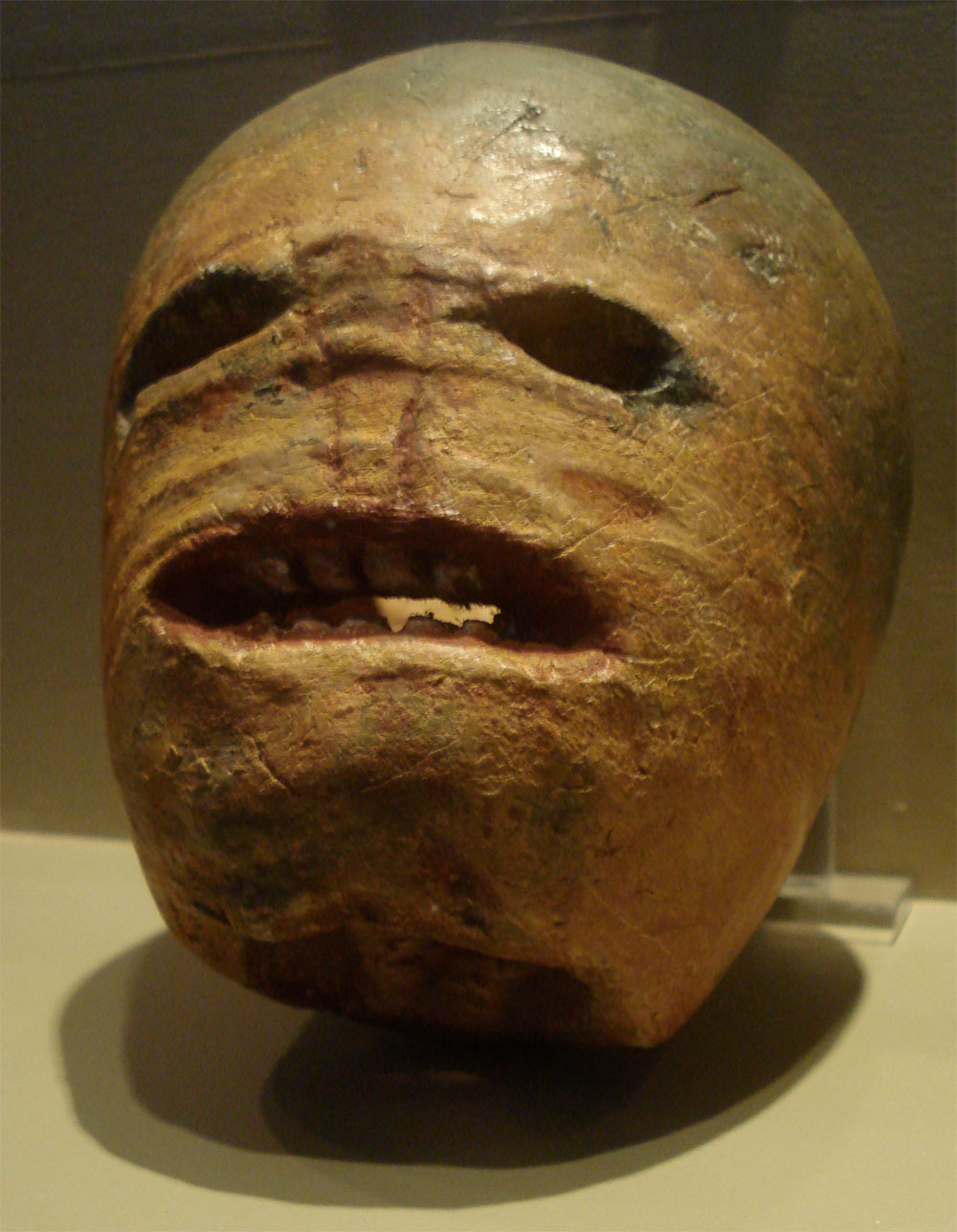
Nothing gets the inventive process moving like a commercial holiday. Unlike Christmas, Halloween lacks a committed religious lobby arguing that the festival has become too commercialized. Gaelic Druids, engaging in their Samhain Festivities, would probably be in awe of the variety and sophistication of modern creepy faced gourd lanterns. (a particularly creepy turnip Samhain lantern seen at left)

A quick search of the patent office provides several excellent updates of this apparently ancient tradition of making disturbing faces on otherwise inedible tubers. (Yes, I find turnips inedible...)

Everyone likes a menacingly happy Jack-O-Lantern. That's why, in 1907,  JC Tyndall of  St. Louis decided to file and get a patent (No. 848,938 on a "Toy Lantern"). Tyndall realized that the weak point of any Pumpkin light was the cap, and the susceptibility of the entire enterprise ending in a pumpkin scented conflagration. therefore, his pumpkin lantern includes a candle retainer, and an interlocking cap and gimbals mechanism for easy transport. the Specification does not detail why the eyebrows are so disturbingly curved.


In the continued vein of creepy faced pumpkin products, we move onto B. Wilmsen's particularly threatening Jack-O-Lantern patent issued in 1934. (No. 94,935 on a "Pumpkin Lantern").Tyndall had actually technology. Wilmsen make up for his lack of technical sophistication in this design patent with existential pumpkin-faced dread. His products nearly vertical optical orbs scream "infringe me if you dare!"


Lastly, we have an epileptic seizure inducing pumpkin Lantern. The psychedelic 1960's produced some interesting and mind altering experiences.  None of these hold an electronic candle to a double faced Janus-like Pumpkin invented by R.R. Authier of Oaks Bluff Mass and issued as Pat. No. 3,250,910. (Ed: Martha's vineyards for those who don't know).This specialty lantern has dual faces, one scary and one comical. In addition, it contains selectively operated light sources of differing colors. Lastly, these lights can blink or strobe, producing the red flashing eyes of a haunted monstrosity, in pumpkin form.


Always remember to check the patent office for particularly excellent holiday ideas.

Historical Patent Trolls: James Beaumont Neilson Edition

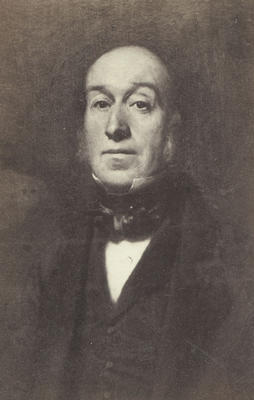
James, massive Troll and Fit model for Scrooge 
It is often argued, with copious amounts of digital ink, that patents are a net drain on innovation and our economy.

I tend to push back against this position, mainly out of enlightened self-interest.  I work in the IP field, if we did away with it at the whim of a subset of libertarian minded technocrats, I would have a hard time finding gainful employment. Or, at least a hard time finding employment which affords me the opportunity to opine on various sundry matters of a historical / philosophical sort. 

However, the impetus to push back against the characterization of this, or any time period, as a particularly unique moment in human history is fueled by those same historical pursuits.

The arguments against non-practicing entities (Trolls) stem from the proponent's perceived enlightened self-interest.  The core position of the patent detractor is a belief that the system as it stands (and has stood for 200 years) benefits the lazy at the expense of the industrious. The arguments are premised on a belief that the worker, the programmer, the system builder is innovating, advancing commerce and technology, creating jobs. In contrast, the dilettante inventor, the thinker, the small time experimenter with her one-off patent, is holding progress hostage to her insatiable appetite for licensing fees and royalty payments. Better, the argument goes, to scrap the patent system than for some to pay for technology which they use but do not place much value upon. 

This argument is usually presented in the context of software, as though the concept of non-practicing entities and expensive legal battles over the scope and value of patent rights came into being with the advent of the internet.

In fact, this exact line of thinking was espoused almost 200 years ago by an association of Iron works industrialists who were desperately seeking a way to avoid paying for technology leashed to "extortion-level" licensing fees.  

A brief aside regarding British ironworks in the 1820's. When one has spent all day acquiring iron ore from the heart of some lonely mountain and that same someone wishes to turn that iron into rail lines, rifles and other fine instruments of the Imperium, one needs to smelt the iron.  Traditionally, that was done by blowing (blast) cold air over coke (a purified form of coal that has been roasted) and iron inserted into this (blast) furnace. 

Enter Mr. James Beaumont Neilson. Neilson, manager and engineer of the Glasgow Gasworks, discovered that if you raise the temperature of the air you are injecting into the furnace ( to around 300F), you need far less coke.  Additionally, and most importantly, depending on the temperatures levels and coal type, you could switch from expensive fancy coke, to the normal everyday-get-a-lump-in-your-stocking coal as your fuel (something of which the British Isles had plenty). 
Wow thats a lot of Iron!

Neilson proceeded to obtain a series of patents in Great Britain, Scotland, and Ireland in 1828-29 on this hot blast technology.  Neilson then set about licensing this technology. By 1835, hot blast furnace technology was in every ironwork in Scotland, save one. The license fee was set at the low price of 1 pound per ton of iron produced. This licensing scheme was considered by Neilson to be of a low enough price that people would not circumvent the license and become wanton infringers.  

Neilson was wrong. Almost immediately, Scottish Iron Masters formed an association, which bound the members under penalty of 1000 pounds, to resist:

 "by every method which a majority should recommend, any practical acknowledgment of the validity of  Neilson's patent." 

At the same time, several English Ironmasters were making use of the hot blast technology while refusing to take out licenses.  Neilson eventually won judgments against the English Iron Masters, but spent the next 9 years battling the Sottish Association, Harford Coal, Household Coal, and finally Baird Ironworks.  

Baird initially took a license, determined later that it was 'extortion of the highest sort' and ceased payment. The resulting litigation, Neilson v. Baird, turned into a spectacle. The jury trial lasted 9 days, with more than 100 witnesses called. Estimated attorney costs were multiples of the typical costs for patent infringement in the mid-19th century.  The witnesses spanned the range from businessmen to what modern Patent litigators would classify as testifying experts on enablement, inventorship, validity and damages issues.

When the testimony was compiled, the full picture of Neilson's technology and the scope of infringement was painted. In the 10 years that Baird used the hot furnace they has seen an increase in net profits of more than 260,000 pounds  (more than approx 180,000,000 in USD). The jury sided with Neilson and awarded damages of 11,000 pounds, roughly 10 million dollars in modern sums. He had asked for 20,000 pounds). 

According to modern interpretations, Neilson was a troll of the highest order. He never once claimed to be in the business of iron smelting, only in the allied field of gas works. He had a broad based licensing program that went, sometimes aggressively, after an entire industry. Lastly, he was not shy about litigating his patents and seeking damages from those he accused of infringement.

However, Neilson is widely considered a celebrated inventor, the father of the Hot Blast Furnace, and major contributor to the industrial revolution. If one seeks to modify the patent system, one must account for the Neilsons as well as the standard trolls. What separates their actions in the minds of the public? What anti-patent troll statute would have allowed Neilson to prevail, while barring those egregious abusers of the patent system? I am not sure I have seen a good answer. 

Jordan Garner


Monday, October 21, 2013

Infringement frequency pushback

As a quick post, the following chart is presented from Google's fantastic Ngram viewer.

First, a bit of information regarding Ngram. The viewer is one of those Google 20% projects (i.e. not a core google product) that came out of the Google's massive data trove generated when it optically scanned libraries worth of print books. This scanning was itself not without controversy. See here.

The viewer allows you to search for the frequency of a word, or phrase, and see how that phrase has changed over time.  This allows for hours spent traveling down the internet time sink looking for interesting word / data combinations.

However, I think (and IP nerds agree) that the interesting output is related to the frequency of IP terms in written english. A look at the graph above demonstrates that for all the recent talk about Patents being a drain on industry, the frequency of discussion has remained relatively flat since the 1800s. Time bias being what it is, you see a peak in the late 1940's (probably a combination of medical advances and post WWII electronic / solid state electronic development.) and then a precipitous drop off to a nadir in the 1970's.  For 30 something developers or businessmen, it looks like there has been a terrible rise in patent usage.  However, even in 2009, with Trolls in full swing, the rate of  the usage of patent terms has yet to return to the nominal historical average.

More interesting, copyrights, long the bane of innovators, has been on a steady historical march, with no signs of slowing.

What is slowing is the march of IP infringement references.
     In the above chart, the concept of a "trade secret" seams to occur far more than any of the traditional Federal IP rights. There appears to be a high burst in the mid-80s to the 2000. (Potentially the rise of Japan and China? Topics for another day).

Patent, copyright and trademark infringement references hit their peak in 2000 and have been decreasing ever since.

It should be noted that these are references to the specific terms in published works. It does not include online media (which might be siphoning off the results post 2000)).  However, it would be odd, and a post in its own right to not have some correlation to the prevalence of a term in print and its prevalence in all media.

Anyone who is selling the concept that IP rights, their enforcement, or position in the mind-space of our society needs to justify those claims in light of the charts above.

Friday, August 30, 2013

Flat Design and the Decline of the GUI Design Patent

 With the advent of IOS7, Apple has joined Microsoft (Metro) and Google (Now) in putting to rest (for the time being) digital skeuomorphic designs. While a good thing for designers who like clean lines, it might complicate future GUI Design Patent Strategies.

A quick primer, digital skeuomorphic design elements are when the interface or the icon is designed such that it looks like the physical world object that it is designed to digitally replicate. For example, the bookshelf in Ibook, is digital skeuomorphic design. There is no reason that a digital container of book files needs to look like a bookshelf; other than to relate to you, the user, what is the purpose of the digital program. Additionally, buttons with dropped shadows, or clever isometric representations of objects within the icon space, are all examples of digital skeuomorphic design.

However, with the advent of flat design across the three major mobile development platforms, things like icons designed to look like bookcases is going to be a thing of the past. Flat design, like its "Modernism" architectural equivalent is premised of reducing the ostentation ornamentation. In the same way that neo-Gothic architecture like this gave way to boxy simplicity of like this, so too does flat design trend to simple geometric forms and a studied lack of ostentation and ornamentation.

Part of this change has been led by a difference in attitudes regarding the purpose of the GUI in the first place.  Digital skeuomorphic designs were originally used to help people with no inherent knowledge of the inner workings of computers to easily map real world actions to digital ones. A digital file was made to look like a physical office file. A digital delete function was made to look like a trash can, etc. Now, with at least two generations of American consumers raised on digital entertainment, there is less of a need to visually explain the functions of each icon. It is simply enough, in most instances, to state its function and designate an area for the user to interact with that function.
lots of rectangles, no shadows 

GUIs, flat or not, can be protected by design patents. In 1996, the USPTO created guidelines for the protection of GUIs based on its decision in Ex Parte Strijland.  GUI design or surface ornamentation is protectable as long as it is shown to be novel, not obvious, and not functional. The claimed design may be presented as a line drawing or a digital image. Color and grayscale are allowed to be presented in the same GUI application, but line drawings and digital images are not. Animated designs are also patentable in the United States, and must show a minimum of two views of the animation. 

This is all a long winded intro into the point. Of the recent victories that Apple has achieved against Samsung, Apple succeeded in proving that Samsung had copied a design patented GUI (seen at left). As you will note,  this Apple design is chock full of skeuomorphic elements. This includes not only the icons themselves, but their placement, the shape of the icons, their slightly beveled appearance etc.

However, by moving to a flat design paradigm, Apple and its competitors are moving into a field whose sole purpose is to simplify the display elements, not add ornamentation. As noted above, design patents mush have a non-functional use, and must be directly related to the ornamentation. If flat design takes hold, it will be increasingly difficult for designers to obtain protection for flat designs as they  essentially become functional identifiers for computer tasks. As a result, we are going to see a lot of convergent design elements that people will accuse other people of stealing, but no one will be able to obtain a patent on.

As a result, it is preferable to augment your GUI design patent strategy with a screen shot copyright strategy. This way, if it is an instance of blatant copying, you are still protected by an enforceable IP right.

Jordan Garner

Wednesday, August 7, 2013

Scammers Part 3 "Astro Boy" edition

Reporting on scams has become something of a tradition around here. In order to pull off a good con, the scam artist needs to know something about the psychology of its mark.

 It does the con-artist no good to offer to split a giant pile of bacon with a vegan (however delicious that concepts sounds). 
So to, do IP scammers know their audience. 

While not a new scam, the following letter was recently received in our offices: 

From: Osamu Tezuka Makoto [mailto:osatemakoto@gmail.com]

Sent: July 30, 2013 1:11 PM
To: Firm
Subject: Legal Rep

Dear Attorney,
We are a media publishing company in Japan. We have a breach of intellectual property agreement matter in your jurisdiction, we can forward you the agreement and 5195842743_2305>
Yours Sincerely,
Osamu Tezuka Makoto
Tezuka Production Company
4-32-11, Takadanobaba
Shinjuku-ku, Tokyo 169-075
Japan
Tel: +81333716411
Email: osatemakoto@gmail.com


http://tezukaosamu.net/jp
After some further digging the "client" told us that :
"We are  the owner of rights in a collection of animated characters including Astro Boy.  Springer Publishing of New York City failed to make a required payment upon termination of an intellectual property agreement between the us ."  
On its face, it seams like a golden opportunity  You, sitting in your office, business development book out to the "how to attract clients" chapter, gets this e-mail. You think, "sweet!" all that networking is paying off. Not only with new clients, but internationally famous IP clients. You do some due diligence, both the company, the IP and the opposing party seem legit.  Or do they. Why would a production company trading in a famous brand like Astro Boy communicate with a gmail address. Why would they contact you out of the blue, with no preface or introduction. Why call you "attorney"? 
The details of how this scam plays out differ from mark to mark, but the concept is pretty simple. Tezuka and Sterling (even though these are real valid companies) are setups, honey pots. You are supposed to Google them, see they are real, and rub your hands together in expectation of easy and significant billings. 
In reality, the contact info above, and the contact info they give you for the point of contact at "Sterling" are to the same entity. Once you negotiate a settlement, with a hefty retainer for your trouble, the money gets transferred to your firms' bank-account by a very slow validating banking institution. 
Because the client and the opposing counsel are the same entity, they know when the "money" was transferred  You, the successful hard litigating, hard negotiating lawyer, soon gets a call from the grateful client asking you to forward the money, minus your fees, of course. 
Now, some attorneys will wait until the check has fully cleared before sending on the money. Some will resist, until the client mentions that there are other people who owe them money, and they would like to retain you for future matters.  Either way, some lawyers will send a check, secure in the knowledge that the money in is the bank. 

The problem is, that the money isn't in the bank.  That slow moving bank transfer suddenly shows up as a cancelled check. Now the firm is out some hundreds of thousands of dollars. When you call Sterling and Tezuka, neither of them have ever heard of you. They have their own lawyers, who are you? You have to go to the Executive Committee and explain why you gave away the farm for some magic beans.  
You, my friend, have been scammed. Something for nothing is usually that...

Friday, July 19, 2013

Developer's IP checklist

Awhile back I got a call from a video game developer that was about to go live with their product. The lead developer/CEO had just discovered that there was a trademark registered to a major company, that happened to be the same name as their game.

Luckily, we were able to resolve the issue prior to them going live, but it raises an interesting point.

A lot of the discussion relative to IP in the start up / developer space is colored by the larger market discussion on software patents and their role in, or hindrance on, innovation.  This discussion has sucked all the air out of the room as it applies to the multiple forms of IP that are pretty critical to a successful brand.

As such, I figured I would just do a quick check list for all the app/game/social media/ tech start-ups out there that maybe thought that having a position on patents was their sole IP issue.  Here is the quick check list, followed by some in-depth discussion.


  1. Do you have Copyright Assignments for Coders, Designers and UI/GFX Modelers
  2. Do you have a Trademark on your company / product name. Do you have a domain name on the same?
  3. Do you have a firm wide confidentiality policy?


Copyright  Assignment Documents:
 In the U.S. any works of authorship, which includes drawings, character models, wireframes, code, or text, is covered by copyright.  The copyright vests in the creator at the time of creation. So, as soon as your character modeler generates an awesome character for your app, the copyright in that character vests in the creator. Not, I repeat, Not the company who they they are working for.

This is always true, UNLESS, you have an agreement in place that assigns all of that work to the company.

This can be done in two ways. The first is to have everyone that is working on the project sign a document that assigns all of their work to the company.

Second, which is more subject to legal challenge, is a Work For Hire Agreement. A Work For Hire Agreement that states that the works created were done so as a commissioned work of authorship. This is the language you will find in employment contracts for large media companies and software companies alike. The problem is, if you and your buddies are coding the killer app, when did you sign employment agreements? Odds are you didn't Once you are ready to go live, pitch investors, or hit Kickstarters, everyone who has contributed to the project should agree, in writing that they are assigning their rights over to some entity.  However the agreement is made is largely irrelevant, the goal is to get the assets essential to the company under the ownership umbrella of the company.

As a second point, I always suggest filing a few federal copyrights on art assets or screen shots, just to deter scrapers, clones and knockoff artists.

Trademarks:

Trademarks are source designations of origin. They identify the good or service as coming from a particular entity. As I stated at the beginning of this piece, an invaluable use of time is to check the trademark office to see if the name of your game, company, or app is already in use. If so, is it is the same field of use. There is nothing worse then having to go back through code looking for references to a company name that needs to be changed at the last minute. Securing a trademark relative to a patent is a cheap and easy process. Once it is secured it can be used as your brand and the public show case of all your company has to offer.

I always remind clients that Twitter did not Trademark "Tweet", a decision that came back to bite them in terms of money and attorney fees. See here.

Confidentiality

As a rule of thumb, anything that pertains to proprietary technology, that gives you a perceived edge in the market place (google's search algorithms, Coke's formula, Zucherberg's Hoodie), should be kept confidential.  Not only is this just good practice, but it also lays the foundation of a strong Trade Secret Policy.  As I pointed out in an earlier post here, the rules for protecting valuable IP via Trade Secret Laws has been greatly enhanced.

Every Company should take advantage of that, not just vampire squid banks. The best way to do so, is to make sure that everyone has signed confidentiality agreements that lay out their responsibility to keep the companies secrets...secret.

For the large majority of start-ups and developers, this is all the IP you need. In the future, when you begin driving technology, Patents will become a critical component of your IP strategy. However, you will never get there if you don't secure your IP in the beginning.

Jordan Garner

Monday, May 6, 2013

Architectural Plans and IP

The house to the left, deigned by famed Architect Richard Neutra, and immortalized by photographer Julius Shulman is not for sale. 

However, in the future you could get your very own copy of that house or another house, directly from the work shop of Richard Neutra. 


A new partnership between, Dion Neutra (Richard's son),  and the Neutra Office and California Architecture Conservancy,  allows for individuals to license the right to build their very own Neutra-designed home. Dion Neutra and the Neutra Office will even supervise the construction. 


Of course, the price is "upon request" but is supposedly line with existing custom architectural plans. 

I was once told that if you have to ask the price of something, you can't afford it. That is likely the case here, and that's unfortunate. 


It is really unfortunate that existing plans, already created and merely stuffed into a portfolio somewhere, are being priced as though they were new works of commission. The benefit for Dion is that the plans represent the sunk IP development cost of Richard Neutra not Dion Neutra. Attempting to extract that cost now, on a per copy basis, is a great way to ensure that those with the money to afford it, will resort to hiring a living architect. It is a little like saying every time you wanted to hear a song from your favorite artist, you had to pay to go to a concert. 


One goal of IP to place the maximal level of control over a work in the hands of its creator. However, a competing goal is to maximize the value of the work. In this circumstance, it is clear (maybe not to them) that it is the desire of the Conservancy is to minimize the wide scale reproduction of Neutra design homes, at the expense of well...nothing.


Pricing the plans such the "brand" value of the Richard Neutra is maintained (i.e. expensive), does nothing to advance the state of modern architecture, nor does it maximize the inherent IP value of Richard Neutra's work. 

One of the problems in American Housing stock is that the places in which people who appreciate Neutra style homes (i.e. Modern, yuppie types) live, are the same places that have pretty well developed housing stock. It is generally not possible (economically, or otherwise) to move into, say Scarsdale, and build a Neutra home from scratch. You would likely need to tear down an existing house and build a Neutra home over the bones of that. Once you have spent a significant amount of money tearing down a perfectly good home, odds are, you are going to replace it with something highly customized to your needs. Odds are, a Neutra Home, is not highly customized to that affluent individual's particular needs. 


Instead of pricing it in a way that only a very few people will avail themselves of the opportunity, Conservancy should be pricing the plans to hit the urban / upscale suburb market. By making the plans available for a small fee, the range of potential builders increases dramatically. 


I am not advocating forcing IP owners to license their works at cut rate prices. However, it makes sense to sell the plans to modern, aspirational housing, to actual aspiring artistic people. These people generally do not pay for custom architectural plans, because they are expensive. Here, Neutra has no cost, so the profit margins, at any price, are wide.  


Jordan Garner - 


Thursday, May 2, 2013

Scammers Part 2

A while back I talked about watching out for scams in the form of "official" seaming documents coming from overseas and asking for "international patent" fees.

Well, short time ago, we started receiving inquires from our clients regarding the same issue but this time from a "official" international Trademark Office in Latvia. Note: There is no International Trademark Office. Second Note: If there were...It would not be in Latvia.

Just as in the first instance,Leason Ellis is taking the fight to the scammers.

See here: http://www.law360.com/articles/437509/ip-firm-leason-ellis-sues-to-shut-down-trademark-scammer

Check back for updates.